
HEY, I'M YOUR HEART VALVE,
AND I'M HERE WITH AN IMPORTANT VALVENTINE'S DAY MESSAGE

Your heart valves need your love and attention!
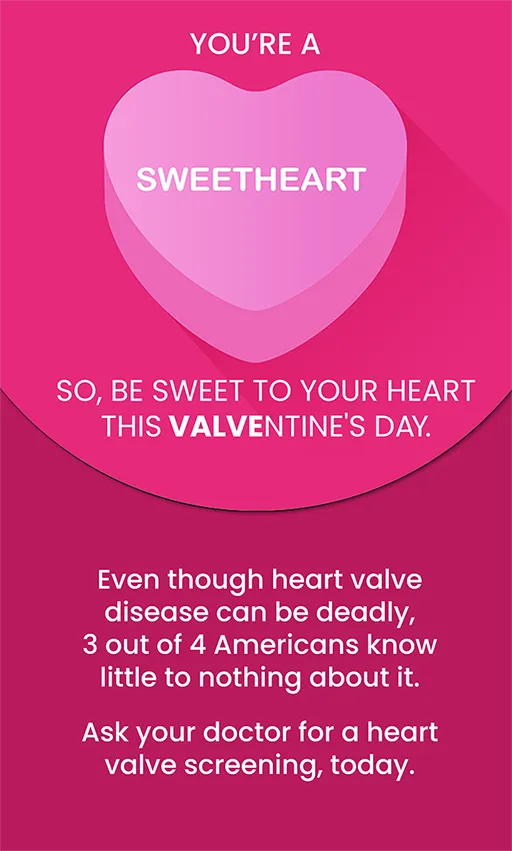
To get the word out about heart valve health, we celebrate Valventine’s Day*—a special time in February that’s all about treating your heart valves right. While most people know about heart disease, many know nothing about heart valve failure (severe aortic stenosis). This deadly form of heart valve disease impacts millions, which is why getting your valves checked is a MUST.
*
Valventine’s Day and Heart Valve Disease Awareness Day are one and the same! Both are celebrated on February 22. However, ask your doctor to screen for heart valve failure any time of the year!

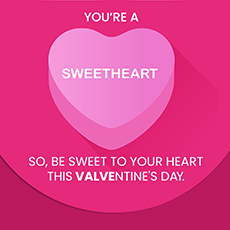
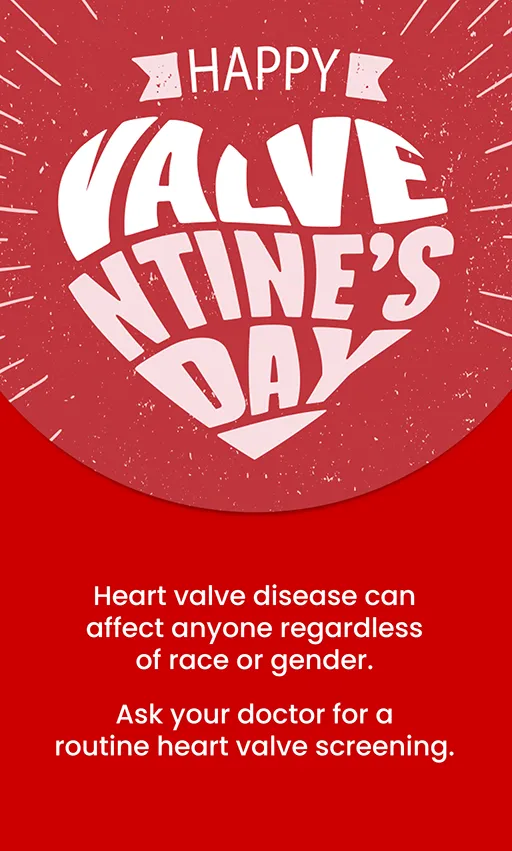
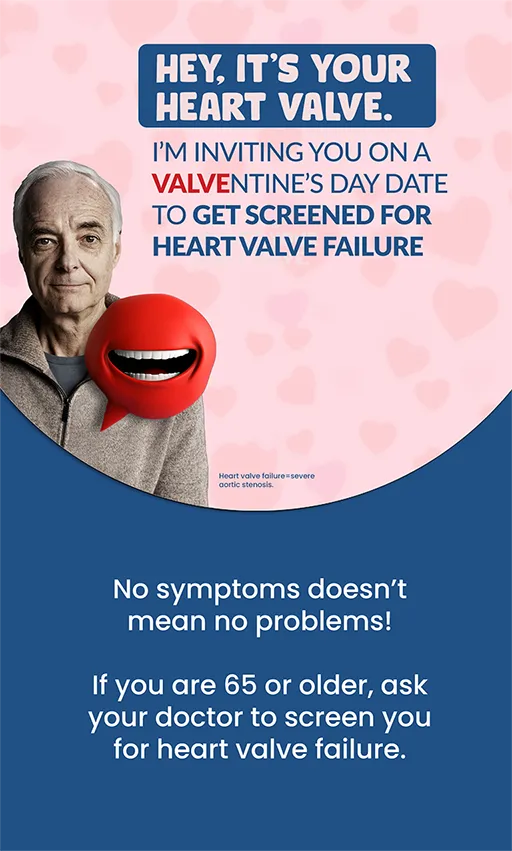
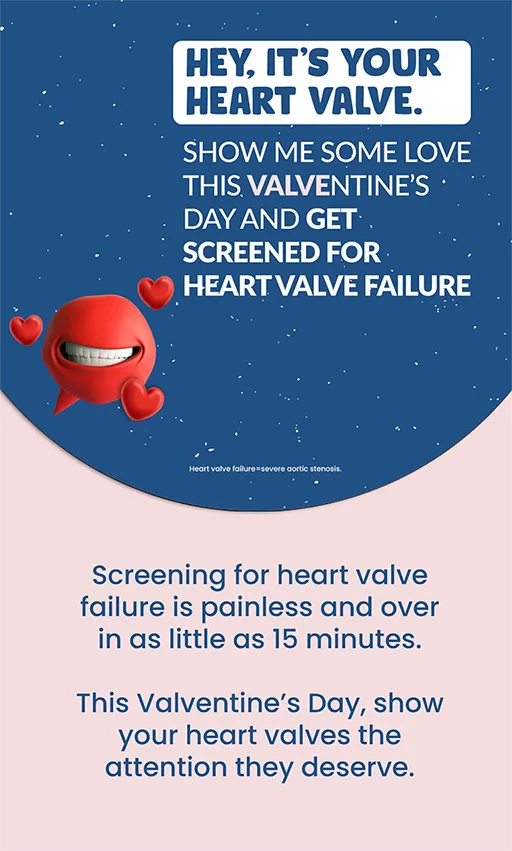
By catching heart valve failure early, you may be able to get treatment that could save your life. Send a Valventine’s Day card to your loved ones, encouraging them to get their valves screened, too—especially if they’re 65 or older.
Send a card
ROSES ARE RED. VIOLETS
SCREENING YOUR VALVES IS THE SMART
This is a heart “” AND this is the kind that beats in your chest
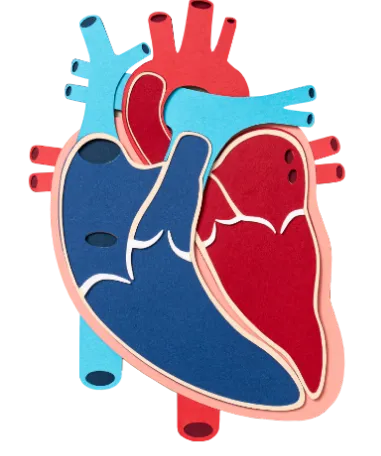
What is heart valve disease?
As you get older, you can develop heart valve disease, where 1 or more of your 4 heart valves may stop working properly. One of the most common types of heart valve disease, aortic stenosis, is caused by a buildup of calcium that makes the valve stiffen over time, reducing blood flow.
How does it become heart valve failure?
Because heart valve disease is progressive, it will continue to get worse. When aortic stenosis becomes severe, we call this heart valve failure—a condition that can lead to complications like heart failure, stroke, and even death. Heart valve failure must be treated. Your life depends on it.

NO SYMPTOMS DOESN'T MEAN
Heart valve failure can be quiet but deadly. That’s why it’s so important to get screened!
Facts to take to heart

Heart valve failure affects 2 million people in the US. That’s almost the population of Paris, France (the City of Love)!

Once symptoms start, 1 in 10 patients with heart valve failure may die within 5 weeks while they wait for treatment.

Heart valve disease is more common with age. More than 1 in 8 people age 75 and older are estimated to have moderate or severe heart valve disease.

Older adults are underscreened for heart valve failure.

Black and Hispanic Americans receive fewer treatments for failing heart valves.

Women are 20% less likely to be treated than men (a gap that continues to grow).†
†Patients with symptoms receiving aortic valve replacement.
Send a Valventine’s
Share your care with family and friends by spreading the word about heart valve failure and the importance of screening.
1. Click on a design below2. Fill out who you're sharing it with3. Click "Send"
THE REAL SOUND OF HEARTBREAK
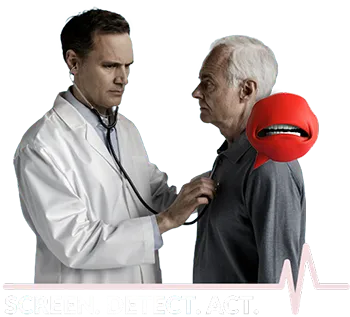
A heart murmur might be the first—and sometimes only—sign that you have heart valve failure. If your doctor hears this unusual “whooshing” sound when listening to your heart, ask them about getting an echocardiogram.
Find out more